



 86-513-68903288
 Zhongnan Edifice, No.36 Building, Nantong, Jiangsu Province, China.
 +8613906298796
 +8613921611100

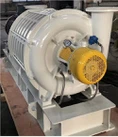
Roots blowers can be roughly divided into single-stage and double-stage according to their working methods. Among them, there is only one compression stage blower, which we call a single-stage blower, and two single-stage blowers are connected in series. A blower that performs two compressions is called a two-stage tandem blower.
According to the number of impeller heads: two-lobe Roots blower and three-lobe Roots blower;
According to the purpose: shaft kiln blower, gasification blower, aeration blower, etc.;
According to the type of medium: air blower, gas blower, hydrogen blower, sulfur dioxide blower, etc.;
According to the transmission mode: direct-connected blower and belt-connected blower, etc.;
According to the cooling method: air-cooled blower, water-cooled blower and counter-current cooling blower, etc.;
According to the structure type: vertical blower, horizontal blower, vertical shaft blower, dense group blower, etc.;
According to the seal type: labyrinth seal, ring seal, packing seal and mechanical seal and other types of blowers.
Instructions for installing roots blower
Due to the Roots blower is a high-speed machine, it will generate vibration, and due to the pulsation of the internal air, the vibration of the Roots blower is also increased, so the installation of the Roots blower needs to be fixed on the ground. According to different blower models, dig a square pit of 150*150mm square and 300mm deep on the ground according to the size of the blower, and bury the anchor bolts, then connect the blowers with bolts and nuts, and finally put them in the square pit. Fill the cement concrete, and after the concrete is fixed, then tighten the nut with force, the blower base and the concrete are firmly connected together, so that the vibration displacement of the Roots blower during operation can be reduced, and the operation safety of the equipment can be improved. And because the vibration is reduced, the service life of the blower is greatly extended.